
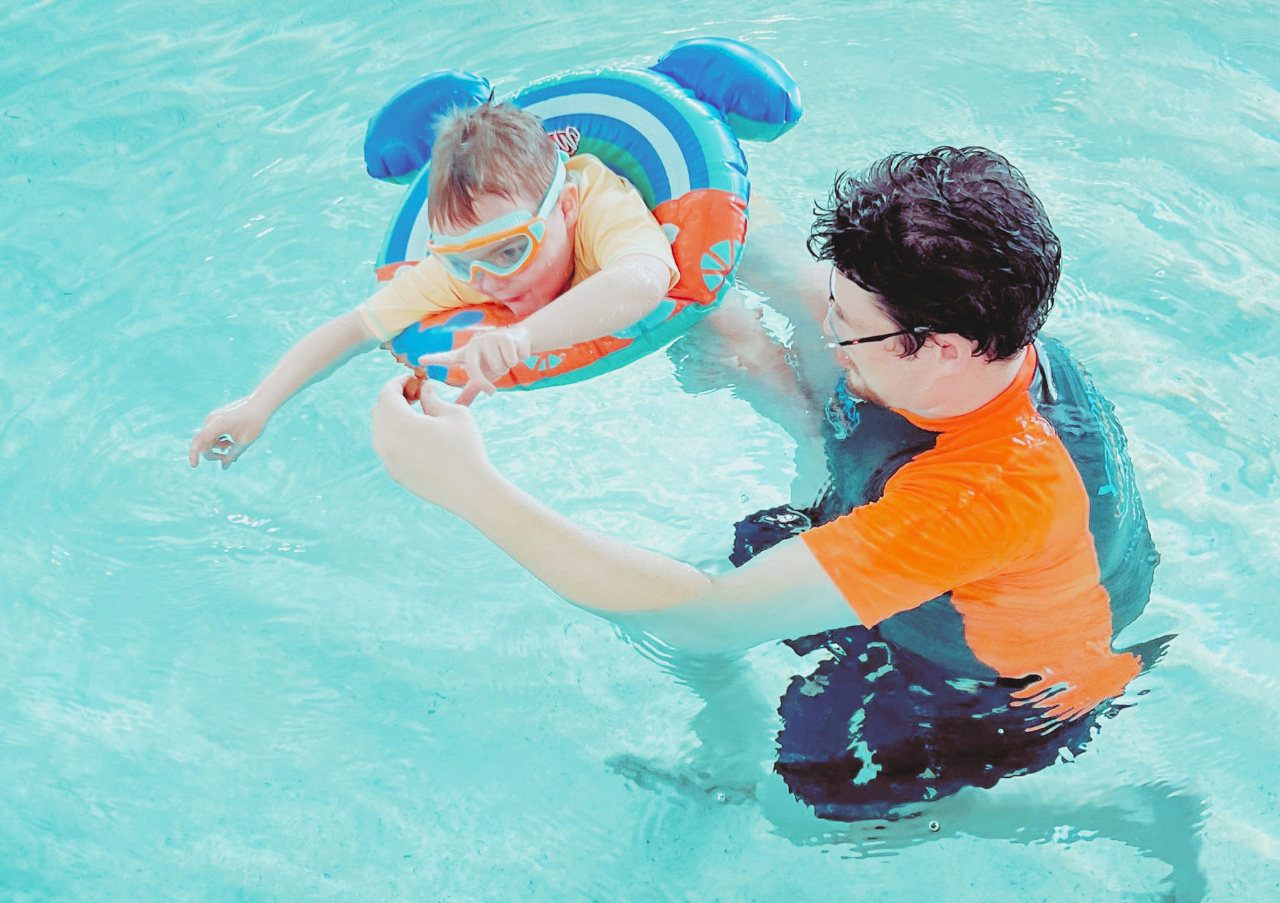
 Why Water Can Be a Powerful Environment for Paediatric Physiotherapy
When we think about physiotherapy, we might picture exercises performed in a clinic, gym, or at home. But for some children, the water can provide a unique environment in which to explore movement and practise physical skills.
Paediatric hydrotherapy is more than simply exercising in a swimming pool. Under the guidance of a qualified physiotherapist, the properties of water can be used to change the way a child experiences movement.
This can create opportunities to practise skills that may feel different, or sometimes more achievable, in the water.
What makes water different?
Water has several physical properties that can influence movement.
Buoyancy provides an upward force that can reduce the effects of gravity on the body. Depending on the child’s position and the depth of the water, this can provide support while they practise movement.
At the same time, water provides resistance. Moving through water generally requires more effort than moving through air, and the amount of resistance can change depending on how a movement is performed.
The pressure of the water can also provide sensory input and may contribute to a child’s awareness of their body as they move.
Together, these properties create an environment that is different from exercising on land.
Creating opportunities to practise movement
Every child brings different abilities, experiences and goals to physiotherapy. This means hydrotherapy does not follow a one-size-fits-all approach.
A physiotherapist might use the water to support a child while they practise changing position, reaching, kicking, stepping, floating, maintaining balance or moving through the pool.
The therapist can modify the activity by changing factors such as the child’s position, the amount of physical support provided, the depth of the water or the way resistance is created.
This allows the challenge to be adjusted to the individual child.
For one child, the water may provide enough support to begin exploring a movement they have found difficult on land. For another, the therapist may use the resistance of the water to increase the physical challenge.
The important point is that the pool is being used as a therapeutic environment, rather than simply as a place to exercise.
 From practising a skill to building confidence
Physical skills are only one part of a child’s development.
A child may also be learning how to approach a new task, solve a movement problem, communicate their needs, make choices or persist when something feels challenging.
The water can provide opportunities for these experiences alongside physical practice.
For some children, being able to attempt a movement in a supported environment can help them experience success with a task that has previously been frustrating or difficult.
That does not mean a skill learnt in the pool will automatically transfer to land. Movement in water and movement on land have different physical demands.
Instead, hydrotherapy can provide another environment in which a child can practise components of movement, explore different strategies and build experience that can contribute to broader physiotherapy goals.
Connecting therapy with everyday life
Effective paediatric physiotherapy is not just about what happens during a therapy session. It is about helping children participate in the activities that are meaningful to them and their families.
Depending on the child’s goals, this might involve developing physical capacity, practising balance and coordination, working towards greater independence with movement, or increasing participation in recreational activities.
Hydrotherapy can form part of this broader approach.
The therapist can identify the skills that are important to the child and consider how activities in the water can provide opportunities to practise relevant components of those skills.
For example, a child working towards greater independence with movement may practise changing position or maintaining balance in the pool before progressing the challenge as appropriate.
The specific activities will depend on the individual child’s abilities, goals and physiotherapy assessment.
 Building water awareness and safety skills
For some children, time in the pool can also provide an opportunity to develop foundational water safety skills.
Living in Australia means that water is a familiar part of everyday life for many families. Beaches, swimming pools, rivers, lakes and other waterways are common places for recreation and family activities. Developing water awareness and safety skills is therefore an important part of helping children participate as safely as possible in the environments they are likely to encounter.
Not every child is able to participate comfortably or successfully in a typical group swimming lesson. Factors such as physical disability, developmental differences, sensory preferences, communication difficulties or the demands of a busy group environment may make traditional lessons challenging.
Individualised hydrotherapy can provide a different setting in which a physiotherapist can work on skills relevant to being safe around water, according to the child’s abilities and goals.
Depending on the child, this might include developing awareness of the aquatic environment, practising entering and exiting the pool, changing position in the water, learning to respond to instructions, practising floating or supported movement, and developing the physical skills needed to move towards safety.
These activities are not a replacement for formal swimming instruction or water safety education. Rather, they can provide an opportunity to work on relevant foundational skills when a typical swimming lesson may not be the right starting point for a particular child.
For some families, developing greater comfort and familiarity in the water may also be an important step towards future participation in swimming lessons or other aquatic activities.
Progress does not always look dramatic
One of the most valuable things families can notice during therapy is the small change.
Perhaps a child attempts a movement without prompting. Maybe they remain engaged with an activity for longer, tolerate a new position, try something they previously avoided, or discover a different way to complete a task.
These moments can be meaningful indicators of progress.
Physiotherapy is not always about achieving a dramatic new skill from one session to the next. Development can involve gradually building physical capacity, confidence, movement strategies and independence over time.
 Is hydrotherapy right for every child?
Hydrotherapy is not automatically appropriate for every child or every physiotherapy goal.
A physiotherapist considers the child’s individual presentation, goals, abilities, safety and the suitability of the aquatic environment when determining whether hydrotherapy may be appropriate.
It can also be used alongside, rather than instead of, land-based physiotherapy.
The most important consideration is not whether therapy takes place in a pool or on land. It is whether the chosen environment and activities provide meaningful opportunities for the individual child to work towards their goals.
Looking at hydrotherapy differently
The water can change how a child experiences movement by providing buoyancy, resistance and a different sensory and physical environment.
For physiotherapists, this creates opportunities to adjust activities and provide an appropriate level of challenge. For children, it can create opportunities to move, explore, problem solve and practise skills in a different setting.
Paediatric hydrotherapy is therefore not simply about doing exercises in a pool. It is about using the properties of water purposefully as part of an individualised approach to physiotherapy.
Could hydrotherapy be appropriate for your child? Contact our clinic to discuss your child’s goals and whether aquatic physiotherapy may be suitable for them.
References
Australian Institute of Health and Welfare. (2022) People with disability in Australia 2022. Canberra: AIHW.
Australian Physiotherapy Association. (n.d.) Hydrotherapy. Melbourne: Australian Physiotherapy Association.
Australian Physiotherapy Association. (n.d.) Paediatric physiotherapy. Melbourne: Australian Physiotherapy Association.
Australian Government Department of Health and Aged Care. (2023) National Safety and Quality Primary and Community Healthcare Standards. Canberra: Australian Commission on Safety and Quality in Health Care.
Australian Commission on Safety and Quality in Health Care. (2021) National Safety and Quality Health Service Standards. Sydney: ACSQHC.